



McMaster University Professor Karen Mossman has been elected a fellow of the American Academy of Microbiology (AAM).
Fellows of the AAM comprise the honorific leadership group and scientific think tank of the American Society for Microbiology. Election, which occurs annually through a competitive, peer-reviewed process, is recognition of a distinguished record of scientific achievement and sustained, original, and meaningful contributions to the field of microbiology.
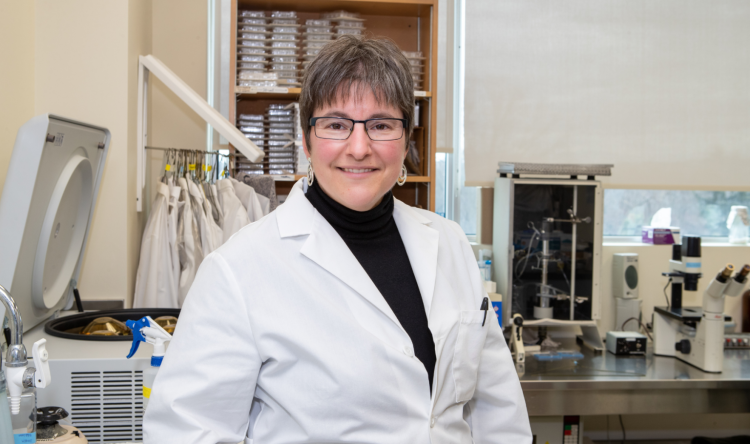
"Academy Fellows are leaders in their field whose work influences the direction of scientific discovery and its role in society," said Vanessa Sperandio, chair of the Academy Governors. "Election to the Academy is a significant professional milestone, and I am delighted to welcome Karen Mossman as a member of the 2026 cohort."
Mossman, a professor in McMaster's Department of Medicine and a member of the Michael G. DeGroote Institute for Infectious Disease Research, has been elected for her globally recognized research in the areas of molecular virology and cancer immunotherapy.
Her work focuses on understanding how viruses interact with different cells in order to develop novel therapies for emerging infections and cancer. At the outset of the COVID-19 pandemic, Mossman's team played a critical role in the first isolation of SARS-CoV-2 from Canadian patients, enabling critical follow-on research efforts nationwide.
Mossman, who served as McMaster's vice-president of research from 2020 to 2024, says that her election to the AAM is a meaningful tribute to the many supporters who have helped power her research over the years.
"More than anything, achievements like this are a testament to the amazing colleagues, collaborators, and trainees that I've had the privilege of working alongside," she says. "Science is a true team effort, and this distinction is recognition of the brilliant minds both at McMaster and elsewhere that I've been lucky enough to work with."
Mossman is now the tenth McMaster-based scientist to be inducted into the AAM, joining Max Chernesky (1965), Gerry Wright (2013), Cameron Currie (2014), James Mahony (2015), Eric Brown (2016), Lori Burrows (2017), Michael Surette (2018), Marie Elliot (2021), and Brian Coombes (2023) as fellows.
"McMaster is a microbiology powerhouse," Mossman says. "Our microbiologists many of whom are also AAM fellows have cemented the university as an international leader in areas ranging from virology and mycology to antimicrobial resistance and drug discovery."
While the distinction has provided Mossman with an opportunity to pause and reflect on her career to date, she says she's most excited about what's still to come.
Right now, her group is focused on developing new oncolytic viruses genetically engineered viruses that selectively destroy cancer cells, while sparing healthy ones and she's excited about their prospects of becoming viable new treatment options for patients with pancreatic, lung, and colorectal cancers.
"I'm immensely proud of the research that has led to my election to the AAM, but the prospect of translating some of that work into new treatments for cancer patients is what I find most exciting," Mossman says. "Seeing our discoveries move beyond the bench and into the clinic is the ultimate purpose driving everything we're doing in the lab these days."


