



In recognition of International Day of Women and Girls in Science (IDWGS) on February 11, 2026, SFU spoke to two Canada Research Chairs in the Faculty of Science about their journeys to become leading science researchers at SFU, and the lessons they have learned along the way.
IDWGS is the day established by the United Nations General Assembly to support full and equal access to, and participation in, science and technology for women and girls. Gender equality in science is crucial for building a better future for all, yet women and girls continue to face systemic barriers and biases in pursuing scientific careers.
The UN notes that women continue to be underrepresented in scientific research worldwide. In 2022, just 31.1% of researchers were women, highlighting persistent gender gaps in the field.
Any students who would like the opportunity to meet and learn from women science faculty are invited to join Women in Science Brown Bag Lunch on Thursday, February 12, 2026, 12pm-1pm at Sci-Space (AQ3146).
Lorena Braid, assistant professor & Canada Research Chair in mesenchymal stromal cell biology
Lorena Braid's journey into science didn't begin with microscopes or textbooks, but with creativity, curiosity, and puzzles. As a child competing in the Olympics of the Mind program in elementary school, she was captivated by "the alluring mix of problem-solving, competition and the race against the clock." Looking back now, she realizes how much those early experiences foreshadowed her career.
Science wasn't always the obvious path. Although she did pursue a science degree with a view to pursuing medicine, in her youth, Braid says, "I vastly preferred music, creative writing, theatre and making things." It wasn't until the final semesters of her undergraduate degree, while taking a break from studying to do lab work, that something shifted. "Suddenly it clicked - this was my happy place, my safe place, my zen place. The lab felt like home." Research became "the ultimate puzzle competition," and her passion was unlocked.
Braid's career since has been anything but linear. She describes it candidly as "a hot mess" - but one that led her to places she never could have imagined. After navigating work, school, and raising an infant and toddler, Braid took on a post-doctoral role at Defence Research and Development Canada, where she discovered a deep affinity for translational research. The work "flipped my approach to research on its head," she says. Instead of starting with discovery, she began with real-world constraints and worked backward toward solutions. The experience eventually inspired her to found start-up, Aurora BioSolutions, so she could continue advancing technologies with potential to help people.
Five years later, seeking intellectual community and new opportunities for her family, she applied for a researcher role at SFU. "I never dreamed I would be competitive given my unconventional path and non-academic CV," she says. But SFU valued the translational lens she brought. Today, her lab is uncovering promising new biology with commercialization potential, and she is thriving at the intersection of research, innovation, and mentorship.
At the heart of her work is a simple hope: "In the end, I just want to make other people's lives better." Whether through future therapies or empowering students to overcome their own challenges, she sees impact in many forms.
To those supporting the next generation of scientists - especially girls - Braid offers powerful guidance. Encourage curiosity, she says, and give girls room to explore without fear. "Let girls ask questions, take things apart, make messes, and be wrong - be epic failures, in fact." Curiosity and resilience, not perfection, are what fuel a scientific mind.
Her advice to her younger self is equally succinct: "Get out of your own way." She has learned that fear and self-doubt can be more limiting than any external barrier, and she's committed to helping young scientists see their own potential more clearly.
If there's one message she wants future generations to hear, it's that belonging matters just as much as encouragement. "The next generation of women in science needs more than encouragement - they need belonging, honest (imperfect) role models, and systems that are designed to support them, not test their resilience."
Looking back, Braid doesn't believe in mistakes - only lessons. Her path may have been unconventional, but it led her exactly where she's meant to be. "If one were to create a blueprint for becoming a scientist, I did everything wrong," she says. "But I'm doing work now and have opportunities to create impact that I never even imagined because of my experiences along the way."
Ailene MacPherson, assistant professor, Department of Mathematics & Department of Biological Sciences, and Tier 2 Canada Research Chair, theoretical evolutionary epidemiology
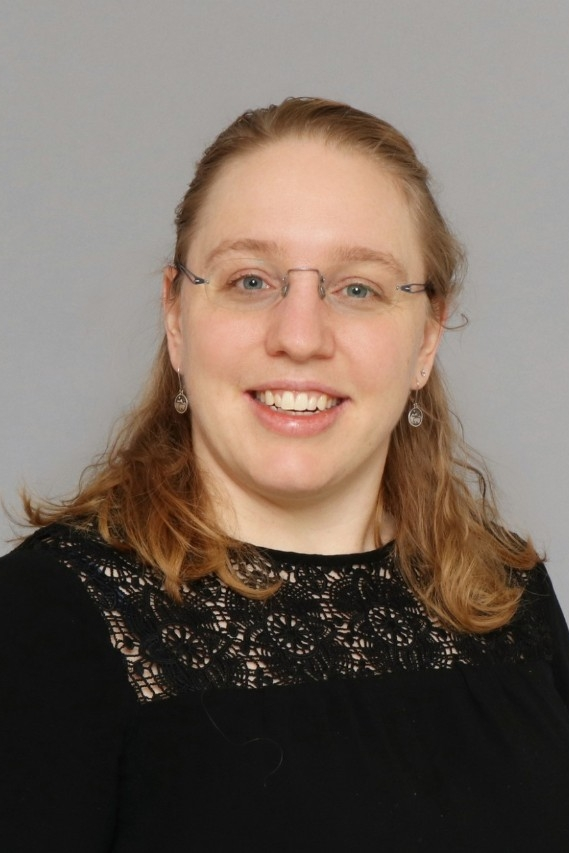
Ailene MacPherson, assistant professor, Department of Mathematics & Department of Biological Sciences, and Tier 2 Canada Research Chair, theoretical evolutionary epidemiology
Ailene MacPherson sits at the rare and powerful intersection of mathematics, ecology, and evolutionary biology. As a theoretical biologist, she uses mathematics to understand how infectious diseases evolve, especially in a rapidly changing world. "I do interdisciplinary research in ecology and evolutionary biology," she explains. "I'm a theoretician, which means I use maths to describe evolutionary and ecological phenomena and to learn about the natural world."
Her work tackles some of today's most urgent scientific questions: how climate change, pollution, and global pressures shape the evolution and impact of disease. "How do these aspects of global change impact how diseases evolve and their consequences for populations?" she asks. "That's my research in a nutshell."
MacPherson's path into this field began with a deep love of math. "I always really enjoyed math," she says. "I liked the rules, and that you could show this is right' or this is not right.'" But she was also driven by a desire to help people. That curiosity led her to pursue biology in university, where an instructor's guidance changed everything. When she raised concerns that she wouldn't get to use math in her biology degree, the instructor connected her to a math-bio program. "She was like, oh, do I ever know what to do with you!" MacPherson laughs. That moment set her on the path she still follows today.
Undergraduate research took her from classrooms to the White Sands Desert in New Mexico, chasing lizards across shimmering dunes. "I just fell in love with it," she says. "My love of biodiversity has just grown ever since."
MacPherson describes her scientific journey as a "story of going from one role model to the next role model to the next." She credits a chain of mentors - Holly Wickman, Scott Newsmer, and the renowned theoretical biologist Sally Otto - for shaping her career. Having been homeschooled, she says she grew up with "a dearth of role models," making these relationships especially important in her development as a scientist.
But the journey hasn't been without challenges. "I have existential crises on a daily basis," she admits. "Self-confidence - like, is the science I'm doing worth it? Will anybody care?" For her, community has been essential: "We are just better if we're in a community. Reach out to your professors, work with your classmates, build that community as much as you can."
Her advice to young scientists - and her younger self - is to push past shyness and self-doubt. "A lot of my life is pretending not to be shy," she says. "If you have to pretend not to be shy to build that community, do it."
Among her proudest moments is not a single accomplishment but a way of living, which she describes as "curating a lifestyle of curiosity". She says: "When I come into my office and I'm curious about what I'm going to learn today, that always makes me really happy."
One milestone does stand out: receiving an early- career award named after a prominent population geneticist. "It felt like becoming part of the population genetics community," she says, "like you are the next one in the chain."
Looking ahead, MacPherson sees enormous responsibility and opportunity for the next generation of scientists facing challenges like biodiversity loss and climate change. But she's optimistic. "We have so many tools and great shoulders to stand on. I fully trust that my generation and the next will step up to this challenge."
She also emphasizes the importance of protecting and celebrating diversity in science, right down to the names on publications. "The more diversity we have, the more diversity it supports." Her message is simple: "Be who you are. Don't feel like you have to change yourself for science. You're contributing to science no matter what your name is."


