


Whether they're crawling in the dirt or buzzing around a park, researchers at the University of Guelph want your bugs.
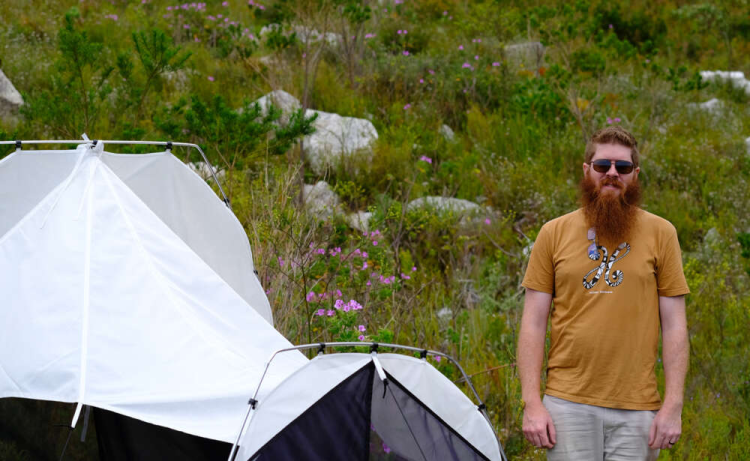
Dr. Ross Stewart is the project lead for BugQuest
It's part of BugQuest, a nationwide community science project run by the Centre for Biodiversity Genomics (CBG). The goal? To set up 1,000 traps across Canada to survey insect diversity.
"This is a huge project," says Dr. Ross Stewart, a post-doctoral scholar at CBG who is project manager for BugQuest. "The largest we've done is 300 traps over several years, so it will really increase our sample size." Stewart completed his PhD at the University of Johannesburg, studying insect-plant interactions using DNA barcoding.
The team working on BugQuest is sending traps from coast-to-coast, asking people to install Malaise traps in public spaces like parks, schools, botanical gardens, and even zoos.
Looking like a tent, they collect insects inside a bottle for subsequent biodiversity assessment. Once collected, samples are sent back to CBG for analysis using DNA barcoding and sequencing technology.
"The goal is to make science more tangible to Canada's youth," Stewart explains. "We want students to participate and receive a list of the species together with photos of the species found in their schoolyard so they can understand what's going on with their insects."
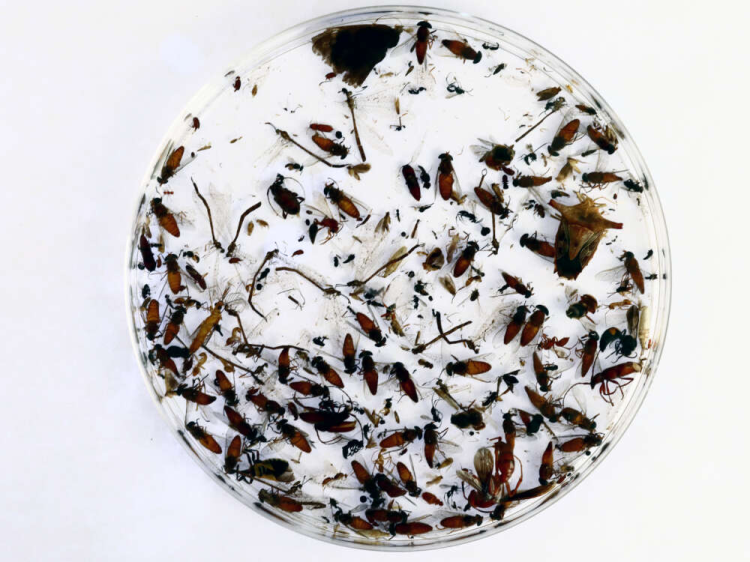
Specimens from the Centre for Biodiversity Genomics
Learn locally, contribute nationally
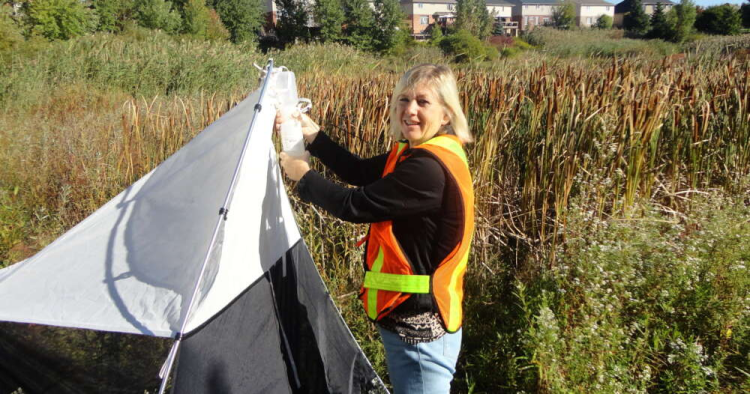
BugQuest participants use Malais traps to gather bugs from their local ecosystem
The project is open to anyone, but Stewart says they're currently focusing on schools in central and northern Canada, as they already have plenty of recruits in southern Canada.
"We want to target areas where it's been difficult to deploy traps, historically speaking," he explains. "We're putting a lot of effort into making sure we can gather data from all across Canada."
Taking part in the project is free, and Stewart says it has been easy to recruit participants.
"Teachers and students are really excited to learn more about the insects in their area," Stewart says. "BugQuest invites people to learn locally and contribute nationally."
The collected data will be shared back with the sampling sites, so everyone involved can see their contribution in the massive project. Participants will have access to an online database sharing details on species lists, images, and statistics for sites across the country.
Samples collected through BugQuest will be added to CBG's digital DNA library, which added its 15 millionth specimen last year. Ever growing, it's the largest digital DNA archive in the world.
Invaluable biodiversity data
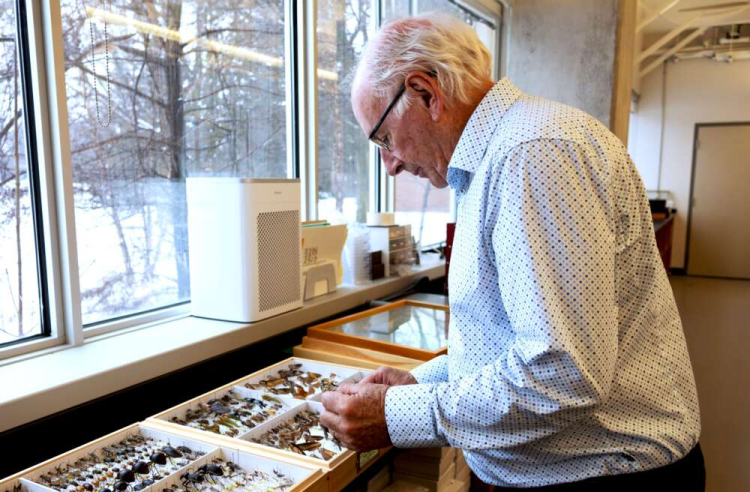
Dr. Paul Hebert looks at insect specimens at the CBG
BugQuest is part of the CBG's larger goal to catalogue all life on Earth.
Dr. Paul Hebert, CBG's founder and CEO, pioneered DNA barcoding more than 20 years ago. The technique uses a short segment of a specimen's genome to accurately identify its species and add it to a global database.
"BugQuest is a hugely exciting and much needed project as it will allow primary and secondary school students across Canada to lead the largest biodiversity survey ever undertaken in our nation," says Hebert.
As the world stands on the brink of a mass extinction event, Stewart says the data collected in this project will be invaluable in the assessment of global biodiversity.
"It's priceless," he says. "We're never had such a detailed picture of Canadian biodiversity. We're generating baseline data to see something that's never been seen before and may never be seen again."
Right now, BugQuest is just running in Canada. But Stewart hopes as they perfect the collecting and testing methods, it will set the stage for the activation of similar programs around the world.
"It's the tip of the iceberg," he says. "We're trying to build a system we can roll out globally."
Anyone interested in participating can sign up for a test kit on the BugQuest website.
BugQuest is part of BIOSCAN, funded by the New Frontiers in Research Fund and by the Canada Foundation for Innovation.