


The medal, which is awarded every two years, recognizes "achievement of special significance and conspicuous merit in imaginative or critical literature" written in either English or French. It is named for Lorne Pierce, who was the editor-in-chief of Ryerson Press from 1922 to 1960, and a formidable champion of Canadian literature during his lifetime.
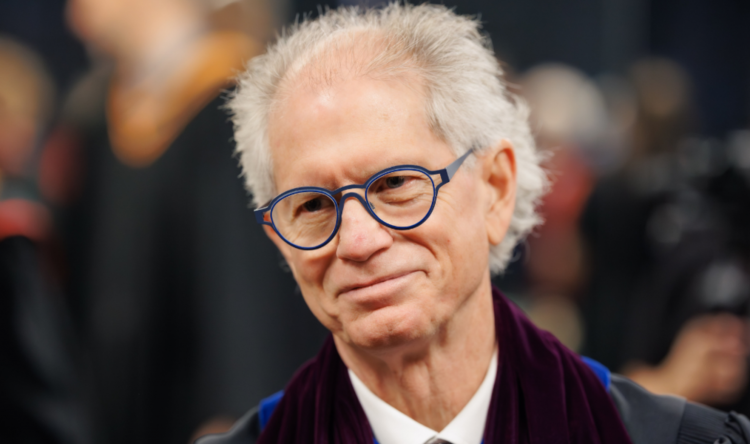
Professor Emeritus Daniel Coleman, who has received the 2026 Lorne Pierce Medal from the Royal Society of Canada. The medal is awarded to those who have demonstrated significant achievement in imaginative or critical literature, and past recipients have included Margaret Atwood, Alice Munro, Northrop Frye and Stephen Leacock.
"Professor Coleman's scholarship has transformed the way readers, researchers and communities understand the relationship of place, identity and knowledges," says Sean Corner, acting dean of McMaster's Faculty of Humanities.
"His scholarship and creative works have inspired both academic and public audiences to engage more deeply with questions of belonging, nationalism and Indigenous land-based knowledge, while modelling the importance of bringing different knowledge traditions into conversation. This award is a testament to the enduring influence and relevance of Professor Coleman's work."
Since it was first awarded in 1926, recipients of the medal have included Margaret Atwood, Stephen Leacock, Northrop Frye and Alice Munro.
Coleman, who is also an associate professor of research at Six Nations Polytechnic, is the award-winning author of 21 books and journal issues, including Masculine Migrations: Reading the Postcolonial Male in "New Canadian" Narratives (1998), which received the John Charles Polanyi Prize; The Scent of Eucalyptus: A Missionary Childhood in Ethiopia (2003), which received a Hamilton Literary Arts Award; White Civility (2006), which won the Raymond Klibansky Prize from the Federation for the Humanities and Social Sciences; In Bed With the Word (2009); and Yardwork: A Biography of an Urban Place (2017), which was a finalist for the RBC Taylor Prize.
Along with fellow English professor Lorraine York, Coleman was also the founding co-director of the Centre for Community-Engaged Narrative Arts, which provides a platform and support for narrative work in the Hamilton community.
Most recently, Coleman and two Haudenosaunee co-editors from McMaster, Bonnie Freeman (School of Social Work) and Ki'En Debicki (English and Cultural Studies), published Deyohahá: ge: Sharing the River of Life, a series of essays by members of Six Nations and their neighbours exploring the Covenant Chain-Two Row Wampum, known as the "grandfather of the treaties," and how it might be used to restore good relations between Indigenous peoples and settlers. That book won the 2026 Canada Prize from the Federation for the Humanities and Social Sciences.
Also in 2025, Coleman published Grandfather of the Treaties: Finding our Future Through the Wampum Covenant, a study of the wampum covenants that underpin Indigenous and European nations.
"I feel a huge debt of gratitude to the land and community where McMaster is located," says Coleman, who was named a Distinguished University Professor in 2023.
"I have been encouraged to learn the things I've learnt over the past three decades and write about them here at the Head of Lake Ontario. I am very aware of the particular ferment of this place that keeps on generating an ecosystem of amazing dialogue and growth."
Founded in 1882, The Royal Society of Canada is the country's senior national academy, promoting Canadian research and scholarly accomplishment, and recognizing academic and artistic excellence.