

When it comes to environmental decisions, logic and data only tell half the story. The rest is driven by raw human emotion, fear, anger, hope, and grief.
Now, a Royal Roads University professor and her lab have received nearly half a million dollars to fund over a dozen graduate students researching these emotional forces, alongside an unexpected place: urban cemeteries.
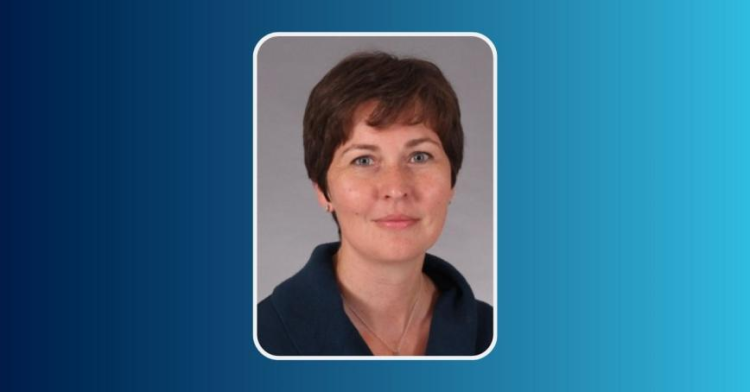
Prof. Sarah Elizabeth Wolfe and her Society, Environment and Emotions Lab (SEE Lab) are recruiting grad students for a suite of new studies focused on southern Vancouver Island, funded by two Social Sciences and Humanities Research Council (SSHRC) grants totaling $452,000. Every single dollar will go directly toward supporting student researchers.
Supporting students and building futures
For Wolfe, ensuring students have access to financial support and practical career development is central to the project.
"I want students to be funded," she says. "I want post-secondary education to be accessible to a greater range of students. There are so many talented students who might not think they can do post-secondary because of the tuition. We need to change that."
In addition to financial assistance, grad students participating in these research projects will receive mentorship from faculty advisors, committee members, and peers while shaping their own career paths.
"These students will be doing applied work, community-embedded work. They'll be out there engaging with the community and exploring potentially contentious issues. There will be a lot big feelings,' as my kids say."
She adds that students can use their graduate degrees as a launchpad toward their professional lives: "They will get to define the nature of their research project in a way that makes most sense to them We curate the type of project that they want to do in a way that makes them curious and excited but also helps them build their future career and contribute to our communities."
Why data isn't enough: The power of emotion
The research program is split into two complementary streams. A SSHRC Insight Grant will fund several explorations to examine how unaddressed emotions influence people's responses to climate and environmental issues, and how those responses often go unrecognized and underappreciated by decision-makers.
"Our hook is looking at environmental issues according to the emotions that they trigger, whether that's joy or fear, hope or anger, anxiety or grief," says Wolfe.
"We want our students to be paying attention to the emotions that come to the fore. Our argument, and what we're testing, is that emotions can have both a positive and a negative influence on how people respond to varied environmental initiatives," she adds. "Sometimes people aren't even aware of the emotions that they're experiencing, but their behaviour and decisions are still impacted."
Wolfe notes that scientists and governments still assume giving people enough data and evidence will lead to better climate choices.
"But people are a lot more nuanced and a lot more complicated than that," she says. "They're not intentionally trying to make bad decisions but they have a lot of emotional investment in the way a particular landscape looks, the way it feels, the way they engage with it, whether it's for recreation or business or just living their lives.
"If it were just a matter of data, good science and incentives, we wouldn't be in the situation we're in."
"These students will be doing applied work, community-embedded work. They'll be out there engaging with the community and exploring potentially contentious issues."
Unlocking climate answers in urban cemeteries
The second research stream takes an intriguing angle: using cemeteries as case studies for modern climate resilience. Supported by a SSHRC Insight Development Grant, student researchers will explore urban cemeteries through three distinct lenses: memory, history and tourism; urban landscape planning; and as their potential as green infrastructure and biodiversity reserves.
"Humans have almost always had intentional burial practices, regardless of where you are or what religion you subscribe to," Wolfe explains. "Settled human societies have always had cemeteries as distinct locations. And so that provides us with an amazing set of potential ancient and contemporary case studies."
The cemetery research will connect partners across Canada and Europe, including municipalities, NGOs, academics, and the private sector.
'A supportive group of people'
Former students attest to the collaborative nature of the lab. Deanna Woods worked with the SEE Lab in 2023 while completing her Master of Arts in Environment and Management at RRU, analyzing community land-use debates in North Saanich for her master's thesis. Her early work helped planted the seed for this new wave of SSHRC-funded research.
"I kind of wish I could do another degree again, just so I could do another study in this area," Woods says.
"I was met with a really supportive group of people really collaborative, willing to help, willing to share their tips and tricks, share their own research, their ups or downs or celebrations. So I found that it really set me up for success."
Join the SEE Lab
Interested graduate students can learn more about available positions and how to apply by visiting the SEE Lab Opportunities page.
Learn more about the School of Environment and Sustainability.