




Predicting precipitation is often the most difficult type of forecast to get right, with the greatest impact on people and the economy. A new project is helping to make those predictions more accurate.
The WxAlliance is a nationwide initiative that includes many leading Canadian universities, government, and industry that will use artificial intelligence (AI) to improve weather forecasts. The project was recently awarded $5 million in funding by the NSERC Alliance Society, grant over five years, led by Concordia University. Dr. Sheela Ramanna, Professor in the Applied Computer Science Department, will be UWinnipeg's lead researcher on this WxAlliance project, along with Scott Kehler of Weatherlogics Inc., as the local Industry partner.
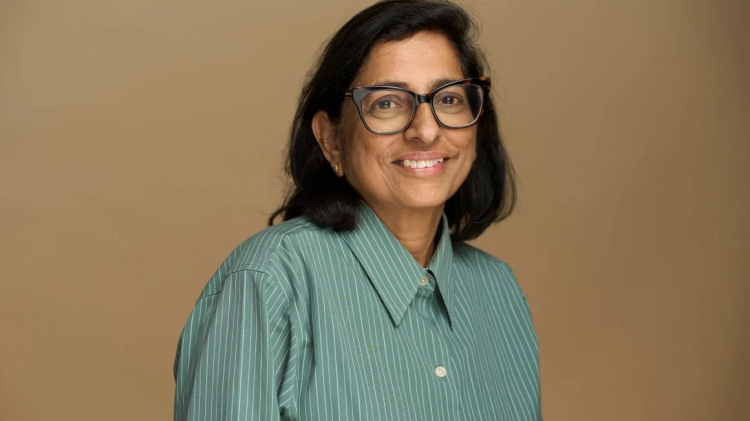
Dr. Sheela Ramanna will work on the WxAlliance project, which received a $5M NSERC Alliance Society grant.
"Using artificial intelligence, we are hoping to discover new ways to improve the accuracy of weather forecasts," said Dr Ramanna. "Specifically, we hope to improve forecasts of precipitation, including rain and snow."
Weatherlogics Inc. is a company that creates custom weather forecasts for private sector clients such as farmers and trucking companies. "Weatherlogics is excited to partner with the University of Winnipeg to improve weather forecasting," said Kehler. "Improved forecasts have the potential to provide many benefits right here in Manitoba, especially for major weather-sensitive industries like agriculture."
Weather information comes in different modalities or type of data: satellite images (visible light, infrared, water vapor); radar scans showing rain and storms; ground station readings (numbers: temperature, wind speed, pressure); past forecast outputs; and long historical records and sometimes text such as forecaster notes or warnings.
No single source tells the whole story: satellites see clouds from above but not what is happening under them, radar sees rain but not the air temperature, and stations give precise numbers, but only at scattered points. A multimodal AI model learns to combine these views, filling in the gaps of one with the strengths of another, thus enabling a skilled forecaster to build a better picture of the weather and predict what comes next, better than traditional numerical weather methods (NWP) alone.
Dr. Ramanna's research will focus on integrating numerical methods (NWP) with multimodal learning methods that are explainable such as, why did the model predict a specific forecast?
The WxAlliance project can help improve weather prediction using mathematical models and AI prediction, which are hoped to yield complementary benefits. With a project this large and complex, the work has been divided into nine different streams.
"Our past collaborations with the University of Winnipeg were highly successful and showed that machine learning could observe weather conditions and improve precipitation forecasts," said Kehler. "We are now able to use more advanced forms of mulitmodal artificial intelligence to make further advances in these areas."
Such advances would have enormous benefits. In Manitoba, weather is extremely variable and changes quickly. Heavy rain and snow affect people's everyday lives and can also be very disruptive to businesses. Extreme weather events can also be dangerous, so having better tools to predict these events is vital.
A team of three graduate students will help Dr. Ramanna with this project.


