


Memorial University researchers are advancing innovative approaches to carbon capture, environmental monitoring and subsurface analysis through a series of newly funded research initiatives - thanks to a $7.4-million investment.
Throughout 2024 and 2025, the Hebron Project contributed $6.24 million and the Hibernia Project contributed $1.16 million in four major projects. In addition to generating new knowledge and expertise, the funding will support experiential learning opportunities for students, particularly in Memorial's Faculty of Science.
"Investments like these help support the innovative research being conducted by Memorial researchers while also creating meaningful opportunities for our students to gain hands-on experience in areas that matter for our future," said Dr. Tana Allen, then vice-president (research and innovation).
"By working on complex challenges related to carbon management and environmental sustainability, students are building the knowledge and skills to help shape sustainable solutions for Newfoundland and Labrador's future and beyond. A huge thank you to the Hebron and Hibernia projects for supporting our students in such an impactful way."
"The Hebron Project is proud to support research that connects academic excellence with real-world application," said Heetal Patel, asset manager for the Hebron Project. "These initiatives reflect our commitment to advancing science and helping prepare the next generation of professionals with the skills that are relevant to our industry and province."
"Collaborating with Memorial University allows us to contribute to research that enhances knowledge of our industry while creating meaningful opportunities for students," said Duncan Fitzpatrick, president of Hibernia Management and Development Company Ltd. "Investments like this help build local expertise, support innovation and ensure Newfoundland and Labrador continues to benefit from world-class talent and research."
Funded projects investing in student experiences are below.
Complete Carbon Capture and Utilization from Point Sources using Biomass-based Adsorbents (Biochar)
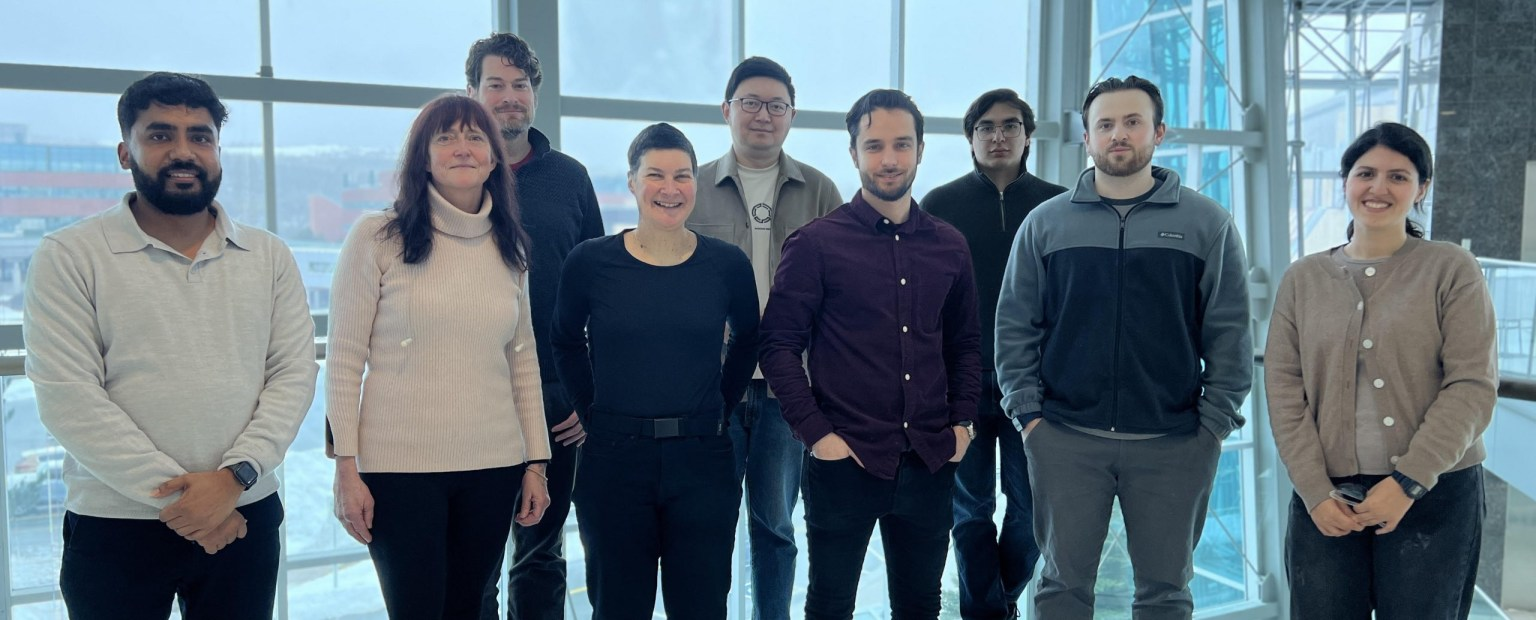
From left are Said Ali, Dr. Kelly Hawboldt, Stephen Hill, Dr. Kris Poduska, Dr. Jian Shen, Brian Espinosa Acousta, Jack Taj, Dylan Lockyer and Atefeh Rahbar. Photo: submitted
Led by Dr. Kris Poduska, professor, Department of Physics and Physical Oceanography, Faculty of Science, and Dr. Kelly Hawboldt, professor, Department of Process Engineering, Faculty of Engineering and Applied Science, the project investigates the use of biochar, produced from forestry and fisheries waste, as a potential material for capturing carbon dioxide (CO ) from industrial exhaust streams.
It explores how captured CO might be incorporated into useful materials, such as construction products, to better understand possible utilization and circular-economy pathways.
Funded by the Hebron Project at $2 million, the project will train 12 highly qualified personnel, including students and early-career researchers through research in biochar production, testing and carbon-capture analysis.
Molecular Carbon Dioxide Membrane Separation - Phase three
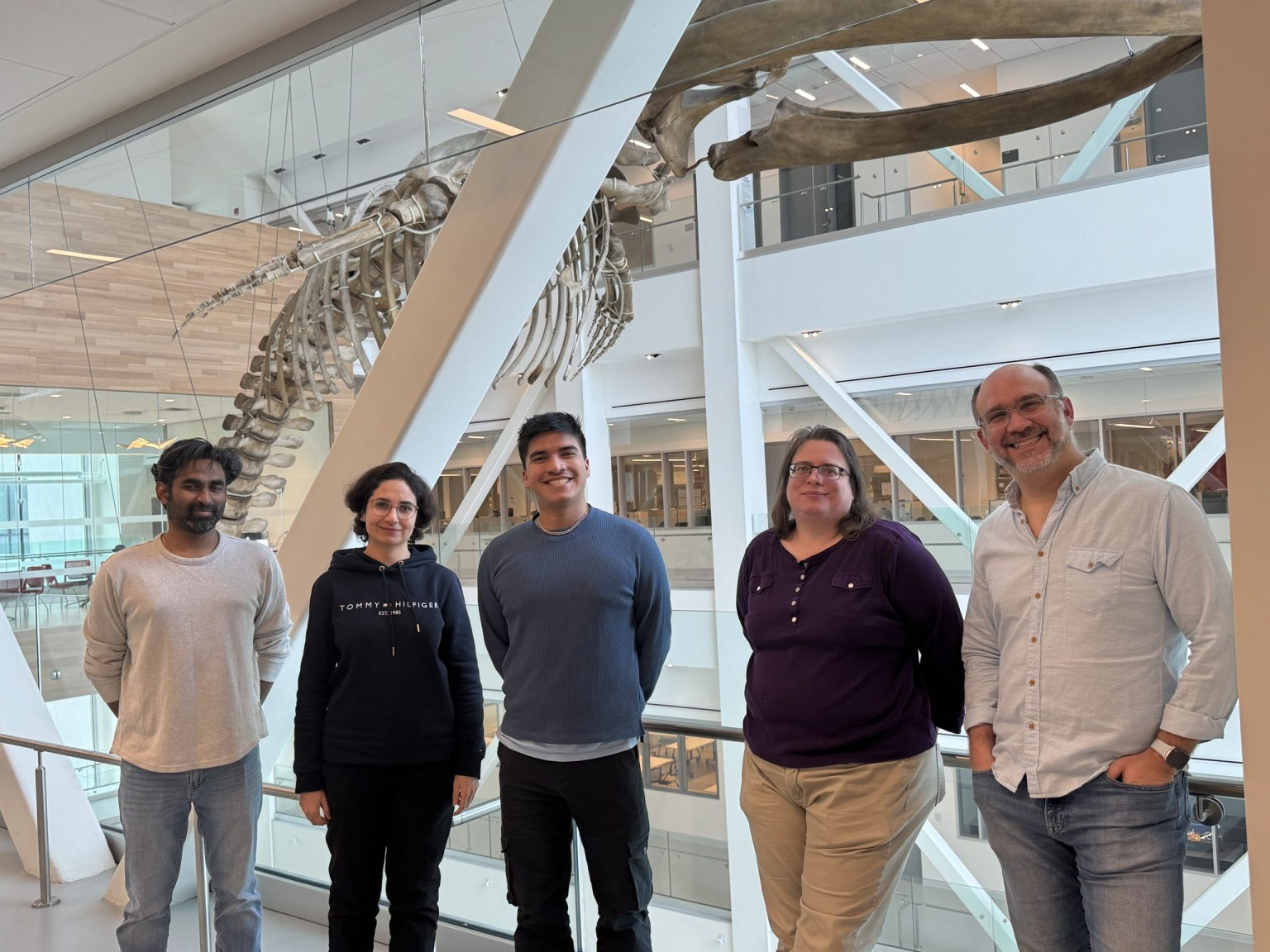
From left are Midhun Mohan, Masoumeh Rostami, Victor Martinez Macias, Héloïse Thérien-Aubin and Michael Katz. Photo: Submitted
Led by Dr. Michael Katz, associate professor, and Dr. Héloïse Thérien-Aubin, associate professor, both in the Department of Chemistry, Faculty of Science, the project investigates metal-organic framework (MOF)-based membranes to better understand how CO can be separated from mixed industrial gas streams.
The third phase of the project focuses on developing, refining and testing MOF-polymer membrane materials under representative operating conditions, building on earlier research to evaluate performance, stability and practical limitations.
Funded by the Hebron Project at $2.4 million, the initiative will train four highly qualified personnel through hands-on work in MOF synthesis, membrane fabrication and testing. It will also upgrade and expand laboratory equipment and testing infrastructure to strengthen Memorial's long-term research capacity.
Effects of short-term and high-intensity exposures of CO in the marine organisms and sediment
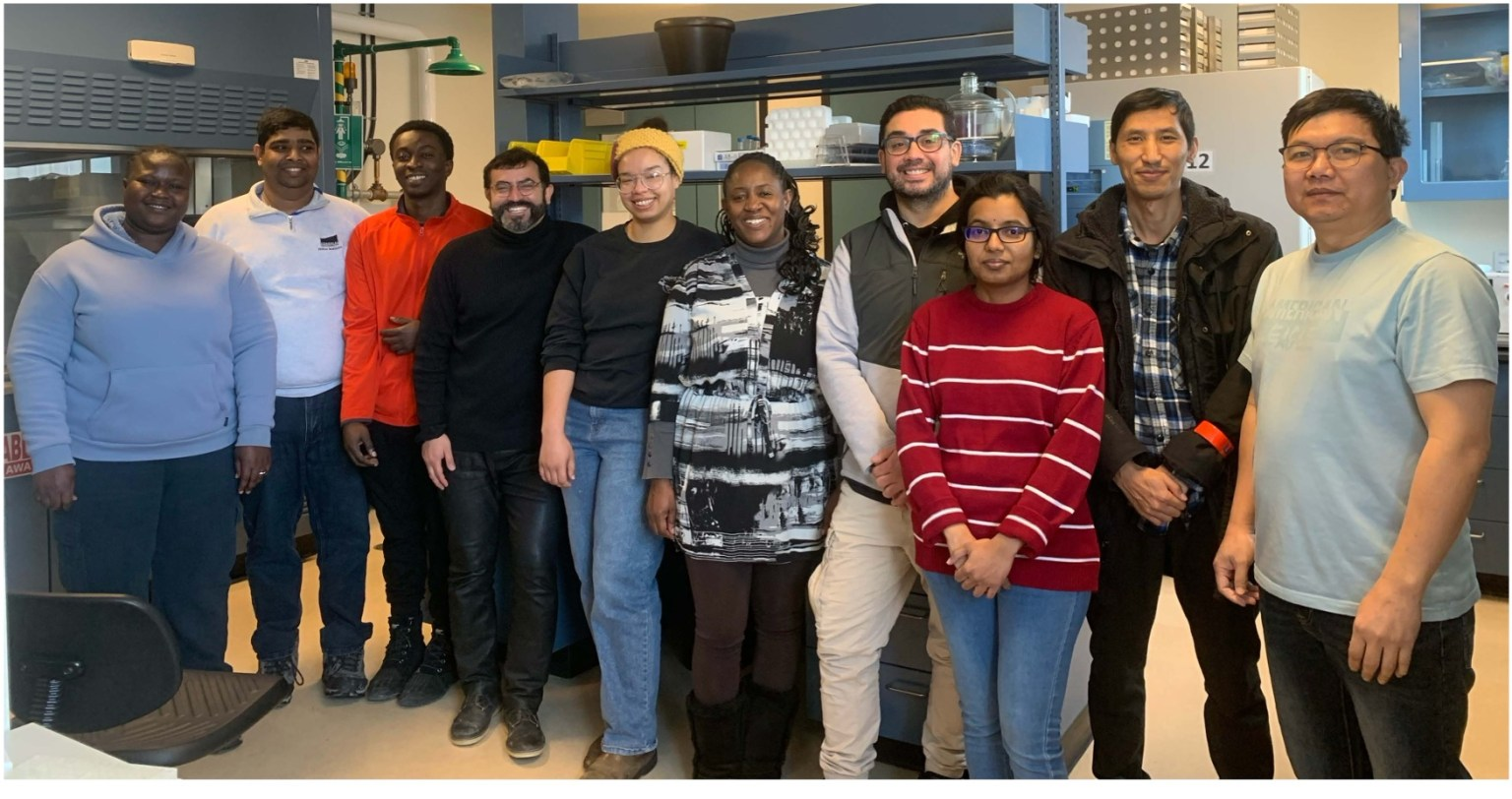
From left are Oluwatoyin Onireti, Sathees Duglas, Chayenne Williams, Dr. Santander, Rebecca Kwabiah, Dr. Vimbai Machimbirike, Luis Tejerina-Pardo, Thurka Paramanathan, Raja Gurung and Trung Cao. Photo: Submitted
Led by Dr. Javier Santander, associate professor, Department of Ocean Sciences, Faculty of Science, the project will receive $768,750 from the Hebron Project to understand the impact of short periods of elevated CO concentrations in sea water on the metabolism of fish, crustaceans and microbes.
By studying species like lumpfish, lobster and snow crab across a series of pressure and saturation conditions in the lab, insights can be gained into the impact on metabolism of these organisms at multiple water depths.
Lab facilities, such as advanced hyperbaric chambers, are used to simulate natural, subsea conditions with elevated CO levels.
The project will train four highly qualified personnel.
Hyperspectral Imagery and Modelling of Carbonate Cementation, Mesozoic, Jeanne d'Arc Basin

From left are Dr. Hilary Corlett, Jaimee Hodgson, Dr. Brette Harris, Eric Hutton, Jorge Iturralde, Noah Slaney and Dr. David Lowe. Photo: Submitted
Led by Dr. Hilary Corlett, associate professor, and Dr. David Lowe, assistant professor, both in the Department of Earth Sciences, Faculty of Science, the Hyperspectral Imagery and Modelling of Carbonate Cementation project, Jeanne d'Arc Basin, will receive $2.3 million, $1.5 million each from the Hebron and Hibernia projects.
The project applies advanced imaging tools (hyperspectral imaging and advance reflectance spectroscopy) to characterize carbonate cementation in subsurface core samples, improving our understanding of diagenesis, reservoir quality and CO storage capacity.
By combining imaging with other geological and geophysical data, the research improves our ability to predict how fluids and CO move and can be stored in the reservoirs of the Jeanne d'Arc Basin.
The project will train up to 14 highly qualified personnel with practical, industry-relevant skills in subsurface data analysis and interpretation.
For more information

230 Elizabeth Avenue
St. John's Newfoundland
Canada A1C 5S7
www.mun.ca