


Canadore College is expanding its genomics and biotechnology research capacity through an investment of $178,070 from the Government of Canada through the Canada Foundation for Innovation (CFI) College Fund.
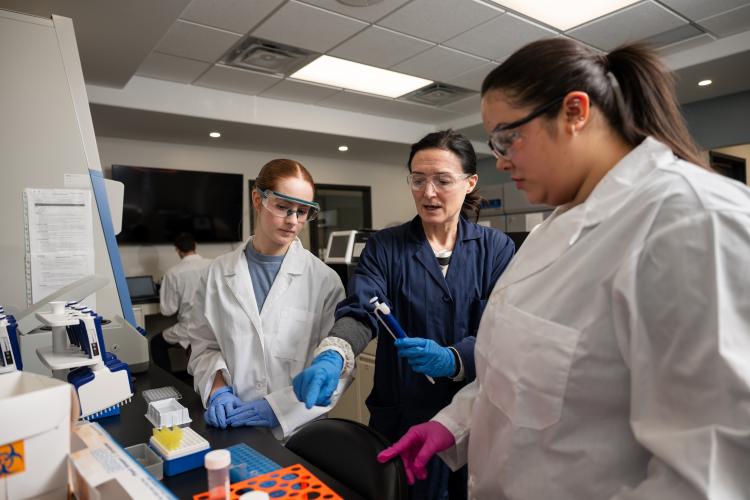
The funding will support Canadore's Enhancing Genomics and Biotechnology Capabilities for the North project, strengthening the infrastructure available to researchers, students, and partners working to address challenges across Northern Ontario.
New equipment will include an Agilent TapeStation, an Illumina MiSeq i100 Series sequencer, a benchtop bioreactor, and expanded data management and storage infrastructure. Together, these technologies will allow researchers to move from sample preparation and molecular characterization through sequencing, data analysis, and applied biotechnology development within Canadore's research environment.
"This investment is about building research capacity in the North that can be put to work for the North," said Dr. Sandra Efu, President and CEO of Canadore College. "By giving our researchers, students, and partners access to advanced genomics technologies, we can strengthen the connection between applied research, workforce development, and the challenges facing our communities and industries. This is an investment not only in infrastructure, but in people, partnerships, and the future of innovation in Northern Ontario."
The expanded infrastructure will support applied genomics research in three priority areas identified through engagement with healthcare providers, industry partners, Indigenous communities and organizations, and the not-for-profit sector: health sciences, agriculture and agri-food, and water and wastewater management.
In health sciences, the platform will connect Canadore's expertise in clinical microbiology, molecular diagnostics, and laboratory medicine with advanced genomic and sequencing technologies. Potential applications include infectious disease research, antimicrobial resistance, pathogen surveillance, infection prevention, and the identification and monitoring of emerging microbial threats.
Environmental applications will include research into wastewater treatment, microbial communities, and the use of metagenomic techniques to better understand and manage water quality and surrounding ecosystems.
In agriculture and agri-food, the infrastructure will support crop and berry genomics, biostimulant research, nutrigenomics, and the study of beneficial and potentially harmful microbial communities associated with plants, soils, and agricultural environments.
"Genomics has applications far beyond a single discipline," said Dr. Ahmed Obaide, Vice-President, Academic at Canadore College. "This research capacity will help us explore questions related to health and infection prevention, food and agriculture, environmental sustainability, and water management. It will give our researchers and partners greater ability to turn those questions into practical, evidence-based solutions while providing students with meaningful experience using technologies they will encounter in the workforce."
The infrastructure will also create new opportunities for collaboration with industry, healthcare organizations, Indigenous communities and organizations, municipalities, environmental organizations, and other research institutions.
Canadore's applied research model supports partners that require access to specialized genomics and biotechnology infrastructure and expertise but may not have the capacity to maintain those resources independently. These collaborations help move research questions toward practical solutions that benefit communities and industry.
Secure research data management will be incorporated into the expanded platform, including work aligned with the principles of Ownership, Control, Access and Possession (OCAP®) and Collective Benefit, Authority to Control, Responsibility and Ethics (CARE) for Indigenous data governance.
The investment will also create greater opportunities for students and early-career researchers to work directly with advanced research technologies alongside faculty, research staff, and industry and community partners. The project is expected to support paid student research positions and experiential learning placements while contributing to the development of highly qualified personnel in a rapidly evolving field.
Students in programs including Biotechnology and Medical Laboratory Technology will be able to use the infrastructure through coursework and applied research. This hands-on experience will help students develop skills in areas such as molecular diagnostics, pathogen detection, sequencing technologies, antimicrobial resistance research, and genomic approaches to clinical and public health challenges.
The investment builds on Canadore's existing genomics and applied research capacity. The College's genomics facility has supported research and industry collaborations ranging from COVID-19 testing and sequencing to plant genomics, agricultural biotechnology, and pathogen surveillance.
The CFI College Fund supports applied research and technology development at Canadian colleges by investing in the infrastructure required to work with industry and community partners on social, business, health, and environmental challenges.
Quick Facts
- Project: Enhancing Genomics and Biotechnology Capabilities for the North
- CFI project number: 46699
- Program: Canada Foundation for Innovation College Fund
- Maximum CFI contribution: $178,070
- Total eligible project costs: $567,143
- Research priorities: Health sciences; agriculture and agri-food; and water and wastewater management
- Key infrastructure: Advanced sequencing and quality-control equipment, bioreactor capacity, secure research data management and storage, and Indigenous data-governance pathfinding
- Anticipated project completion: July 1, 2027
For more information

100 College Drive, P.O. Box 5001
North Bay Ontario
Canada P1B 8K9
www.canadorecollege.ca